Tuesday, October 5, 2010

The Rock as Sinbad


Casting has already begun for the upcoming 3D blockbuster based on the Nights and brought to you by several of the people who were responsible for The Mummy and its offspring.

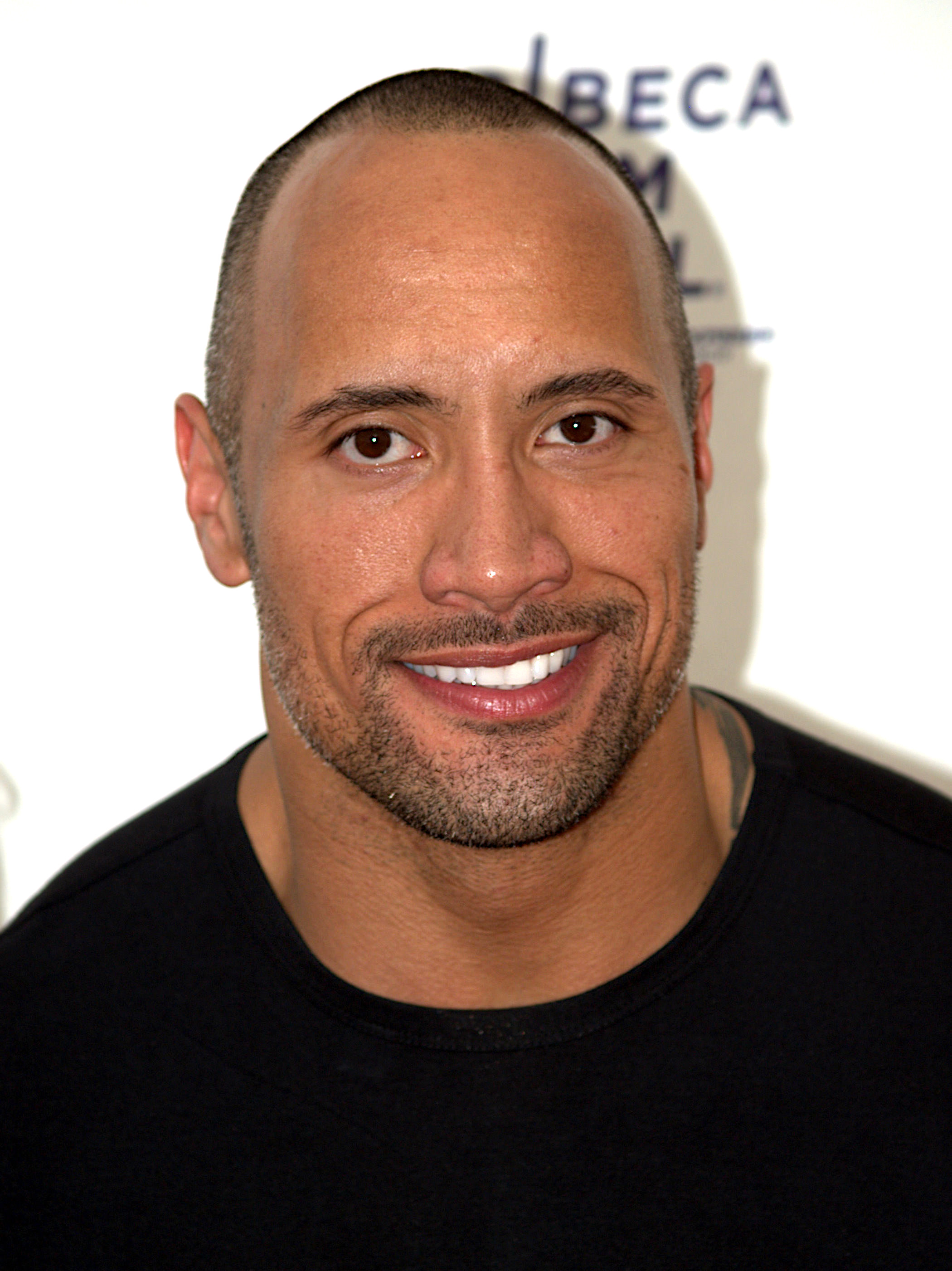
The latest news has Dwayne Johnson (aka the wrestler known as "The Rock") set to play Sinbad.  Just when the poor hapless (and largely lucky) seafarer felt like he needed more muscles Hollywood steps in to chisel them out.  The more action/adventure warrior Sinbad is remade as the further his character gets away from the original sailor.

This movie is setting up to be even more bizarrely related to the stories of the Nights than the film it is purported to be based on (Maria Montez and Sabu's 1942 Technicolor Arabian Nights (http://en.wikipedia.org/wiki/Arabian_Nights_%281942_film%29)).

Here's more about the Rock's role:

From Screenrant:  (http://screenrant.com/dwayne-johnson-sinbad-arabian-nights-benm-80871/)

"Sinbad will be one of three main characters in the upcoming 3D film adaptation of Arabian Nights, directed by Chuck Russell (who previously directed Johnson in The Scorpion King). If Dwayne Johnson agrees to play the badass sailor, he’ll be joining Liam Hemsworth (brother of Thor star Chris Hemsworth) as the main protagonist and Anthony Hopkins as the evil sorcerer Pharotu, murderer of Sinbad’s mermaid girlfriend.

And they say movies aren’t realistic anymore…

The overall plot for Arabian Nights, according to Russell (via Variety), is as follows:
“[A] young commander who, after his king is killed in a palace coup, joins forces with Sinbad, Alladin, and his genie to rescue Scheherazade and her kingdom from dark powers.”
Russell goes on to say that using top of the line 3D technology he’ll be giving audiences a carpet ride like they’ve never seen before. Really, Russell? I mean, is it even possible to top Disney’s Aladdin? Highly unlikely!"

and from Worst Previews.com:  http://www.worstpreviews.com/headline.php?id=19175&count=0

and cinemablend:  http://www.cinemablend.com/new/The-Rock-May-Play-Sinbad-In-Arabian-Nights-20897.html

Thursday, September 30, 2010

Tuesday, September 28, 2010

The Tomb of Sir Richard Francis Burton

Here is a video of someone walking up to the tomb of Nights translator Richard F. Burton in Mortlake, London, England.  As you can see (only briefly at the end of the video) the tomb is in the style of an Arabian tent.


Friday, September 17, 2010

Chagall's Nights Paintings sold at Auction

From 1001 Nights

Thanks to JC for the scan of his book!


Many thanks to JC for passing on this Christie's auction to me.  Unfortunately I took so long to post it it has ended (ended on 9/15/10).  I'm pretty sure though anyone who would be willing to spend 200K UK on these paintings would have known about it already!

The auction's details are quoted below with some background on the Nights.

Info on Chagall: http://en.wikipedia.org/wiki/Marc_Chagall

Auction info: (link:  http://www.christies.com/LotFinder/lot_details.aspx?from=searchresults&intObjectID=5348996&sid=a2c571ad-4c69-4a2b-bd1e-f4dd095dab69)

Book version history from JC:  "The Chagall Four Tales from the Arabian Nights has been reproduced a couple of times.  The original publication was in 1948 by Pantheon Books of New York.  There were two states, a deluxe edition of 21.  It was numbered I-X and lettered A-K.  Each portfolio contained 13 signed lithographs along with text and line drawings.  The pages were loose.  The other state is the numbered and signed edition of 90 lithographs.  Only 12 of the litho's were included in this set.  This is the set Christie's has up of auction.

In 1988 Prestel of Munich reproduced the litho's and text.  All 13 lithos are included along with the line drawings.  I believe that they had previously released the book in German in 1987.  In 1999 the book was released again, in a reduced size.  The 1988 version is the one to have as the reproductions are larger than the later book's. "

Auction information from Christie's:

"Price Realized
  • £217,250
  • ($336,738)
Lot Description
Marc Chagall
Four Tales from the Arabian Nights (Mourlot 36-48; Cramer books 18)
the complete set of 12 lithographs printed in colours, 1948, on laid paper, each signed in pencil, inscribed with the plate number and numbered 70/90 (there was also a deluxe edition of ten with an additional plate and progessive proofs of the lithographs, and 11 hors commerce-copies), published by Pantheon Books, New York, 1948, the full sheets, most with deckle edges at right, generally in very good condition, framed
L. 375 x 280 mm. (and similar), S. 430 x 330 mm.


Special Notice
VAT rate of 5% is payable on hammer price and at 17.5% on the buyer's premium.

Lot Notes
The Arabian Nights, more accurately known as One Thousand and One Nights, is a collection of Middle Eastern and South Asian stories and folk tales compiled in Arabic during the Islamic Golden Age. The work as we have it was collected over many centuries by various authors, translators and scholars across the Middle East and North Africa. Though the oldest Arabic manuscript dates from the 14th century, scholars generally date the collection's genesis to around the 9th century.

The main frame story concerns a Persian king and his new bride, Scheherazade, who tells a succession of stories, night after night, in an effort to postpone the threat of execution. The tales vary widely: they include historical tales, love stories, tragedies, comedies, poems, burlesques and various forms of erotica. Numerous stories depict djinns, magicians, and legendary places, which are often intermingled with real people and geography, not always rationally. Sometimes a character in Scheherazade's tale will begin telling other characters a story of his own, and that story may have another one told within it, resulting in a richly layered narrative texture.

Marc Chagall, arguably the pre-eminent colour lithographer of his age, began his relationship with the medium in Four Tales from the Arabian Nights. As in his later illustration series, Chagall conceived the pictures as augmentations of the text, serving to arouse the interest of both the reader and the viewer. It has come to be regarded as one of his finest essays in the medium of lithography, in large part because the literary source required no change in the artist's style. Chagall found himself confronted by a text which inspired and responded to his art like no other."