Showing posts with label 19th. Show all posts

Sunday, January 16, 2022

1889 Exposition Universelle Bibliography


*I was fortunate enough to teach a 1001 Nights film and literature course last Fall (2021). And I'm even more fortunate to have had such great students. They've let me share their work with you. Bibliography, Annotated Bibliography, and a further report on one article related to their topic (which in some cases is loosely Nights-related). I'll be posting them over the next few weeks. 

**I messed up the formats with my copying and pasting but you know. - M

Here is Shaanel's work on the 1889 Paris Exposition Universelle - 


Shaanel Saroch

Professor Michael Lundell

English 260

14 December 2021

Research Project

Part One: Extended Bibliography

“About Us about the Bie Who We Are How We Work Our History the 1928 Paris Convention FAQS about Expos What Is an Expo? How Is an Expo Organised? A Short History of Expos.” Official Site of the Bureau International Des Expositions, https://www.bie-paris.org/site/en/1889-paris. 

Anido, Julien. “The Exposition Universelle of 1889: Un Jour De plus à Paris.” Un Jour De plus à Paris | L'incontournable Des Visites Culturelles Et Touristiques à Paris. Balades, Visites Guidées, Découvertes Insolites... Visitez Paris Autrement !, 29 July 2020, https://www.unjourdeplusaparis.com/en/paris-reportage/exposition-universelle-1889. 

Bibesco, Georges. Exposition Universelle 1889. Impr. Typ. J. Kugelmann, 1890. 

Catalogue général Officiel: Exposition rétrospective Du Travail Et Des Sciences Anthropologiques. Imprimerie L. Danel, 1889. 

Encyclopædia Britannica, Encyclopædia Britannica, Inc., https://www.britannica.com/topic/International-Exposition-of-1889. 

“Exposition Universelle (1889).” Wikipedia, Wikimedia Foundation, 25 Nov. 2021, https://en.wikipedia.org/wiki/Exposition_Universelle_(1889). 

Exposition Universelle De 1889, https://www.nga.gov/research/library/imagecollections/photographs-of-international-expositions/exposition-universelle-de-1889.html. 

Jonnes, Jill. Eiffel's Tower and the World's Fair Where Buffalo Bill Beguiled Paris, the Artists Quarreled, and Thomas Edison Became a Count. Viking, 2009. 

"Mephisto", the Marvellous Automaton, Exhibited at the International Theatre, Exposition Universelle, Paris, 1889. T. Pettitt & Co, 1889. 

“Paris 1889 Exposition: History, Images, Interpretation.” Ideas, http://www.arthurchandler.com/paris-1889-exposition. 

“Paris Exposition of 1889.” Paris Exposition of 1889 (Prints and Photographs Reading Room, Library of Congress), https://www.loc.gov/rr/print/coll/250_paris.html. 

Paris-exposition... / Exposition universelle de 1889. A. Colin (Paris), 1889.

Paris: Capital of the 19th Century, https://library.brown.edu/cds/paris/worldfairs.html. 

“The Rue Du Caire at the Exposition Universelle in Paris (1889): Patrimoines Partagés تراث مشترك.” The Rue Du Caire at the Exposition Universelle in Paris (1889) | Patrimoines Partagés تراث مشترك, https://heritage.bnf.fr/bibliothequesorient/en/street-of-cairo-art. 

Sabry, Randa. “Le Témoignage d’Amīn Fikrī Sur l’Exposition Universelle de 1889 et La Rue Du Caire : Petite Polémique Avec Timothy Mitchell.” Arabica, vol. 2018, no. 3, Brill, 2018, pp. 368–91, https://doi.org/10.1163/15700585-12341493.

Sayers, Isabelle S. Annie Oakley and Buffalo Bill's Wild West. Dover, 1981. 

“World's Fair - Official Eiffel Tower Website.” La Tour Eiffel, 8 Apr. 2020, https://www.toureiffel.paris/en/the-monument/universal-exhibition. 


Part Two: Annotated Bibliography

Paris-exposition... / Exposition universelle de 1889. A. Colin (Paris), 1889.

The author created this book as a guide to visitors of the Exposition Universelle in 1889. The beginning of the book has maps of the exposition so that the reader can see where the different things to do and see are located. Further on there is a map of different areas in Paris associated with the exposition. The author details what he believes are the most interesting things to see at the exposition so that visitors need not waste time on less interesting displays. There is also a schedule of when certain events are happening and a description of the public transportation that could be used to get to the exposition. This guide is very useful in finding out what exactly went on at the exposition. 

Jonnes, Jill. Eiffel's Tower and the World's Fair Where Buffalo Bill Beguiled Paris, the Artists Quarreled, and Thomas Edison Became a Count. Viking, 2009. 

This book provides the back story of why the Exposition Universelle was created. The book also details different major personalities that were present at the exposition such as Buffalo Bill, Gustave Eiffel and Thomas Edison. While these personalities are famous now and were well known at the time as well, the book also lists people that were relatively unknown at the time who are now famous. Some of these people were Van Gogh, Whistler and Gaugin. The book makes the reader feel as if they are personally experiencing the Exposition Universelle in 1889. 

Sabry, Randa. “Le Témoignage d’Amīn Fikrī Sur l’Exposition Universelle de 1889 et La Rue Du Caire : Petite Polémique Avec Timothy Mitchell.” Arabica, vol. 2018, no. 3, Brill, 2018, pp. 368–91, https://doi.org/10.1163/15700585-12341493.

This article discusses a man named Amin Fikri’s visit to the 1889 Exposition Universelle. He details the Rue du Caire which was a street, built for the exposition, meant to emulate a busy street in Cairo. Buildings on the street were made from demolished buildings from Egypt. The author also discusses how the previous expositions in Paris had different versions of the Rue du Caire. In the 1867 exposition there was a medieval Egyptian palace. This article is a good resource for visualizing the Egyptian displays at the various expositions. 


Part Three

Paris: Capital of the 19th Century, https://library.brown.edu/cds/paris/worldfairs.html. 

Author: The author of this piece is Pauline De Tholozany. This text was created as a collaboration between the departments of French Studies and Comparative Literature at Brown University. These departments relevance to the topic is that the Exposition Universelle in 1889 occurred in Paris, France and the authors use different sources of literature to detail the events. The author seems like an expert in this field because they comprehensively cover all the various expositions that occurred in France from 1855 to 1900. The French Studies department’s contact information is french_francophone_studies@brown.edu. Their online bio is located at https://www.brown.edu/academics/french-studies/. The Comparative Literature department’s contact information is Comp_lit@Brown.edu. Their online bio is located at https://complit.brown.edu/. I did not attempt to contact them. 

Thesis: The thesis of this text is that the purpose of the Expositions Universelle in Paris was to showcase technology and art and to boost the economy. The thesis is built by highlighting the various events and displays that were held during the Expositions Universelle. The evidence the authors use to support their thesis are several primary and secondary sources from the Brown University library such as books with firsthand accounts of the expositions and different artwork that show scenes from the expositions. The question that the author is responding to is “why were the expositions in Paris held?”

Critique: Elements of this text that are good specifically is that the text covers the politic climate, attitudes towards the fairs, and the most interesting events at the fairs. This allows the reader to feel like they were present at the fairs and as if the reader has an eye into the inner working of the fair organizers. Another good element of this text is that the authors used excellent sources while writing the text so there is a lot of interesting and informative data. There were not really any issues to address on this topic in this text other than dispelling rumors of people feeling negatively towards the Eiffel tower and talk of wanting to prevent its construction. The issue is addressed by saying what the actual public sentiment around the Eiffel tower was. One thing that is lacking in my text is any talk of public figures that were present at the 1889 Exposition Universelle. Personalities such as Wild Bill Hickok, Thomas Edison, and Vincent Van Gogh were all present at this exposition and it would have been interesting to read more about their interaction with the exposition. 

Timeliness: This text was written in 2011. The text utilized other relevant scholarship as resources for creating this piece. I don’t believe that timeliness is relevant or important to investigate for this text’s focus because the article is reporting on events that occurred a long time ago for historical purposes. This text does not really have any effect on current events, so timeliness is not an issue. 

Relevance: This text is extremely relevant to the topic of Exposition Universelle 1889. The text not only details the Exposition Universelle that occurred in 1889 it also describes the other expositions that occurred in France and performs some comparison of the fairs in order to understand the different impacts of the fairs on the events of that time period. The only new information that this article gives on the topic is discussing the Exposition Universelle 1889 in relation to the other expositions. I did not find information like this in any of the other texts that I read.

Future Ideas: A course on the topic of the Exposition Universelle that occurred in 1889 could incorporate this text in the beginning of the course as a historical background to this particular exposition and its relation to the other expositions that occurred. An essay assignment on this text might pose questions like “which exposition had the greatest effect on French culture,” “What is the most significant technological advance that came from the Exposition Universelle that occurred in 1889,” or “What impact did the Exposition Universelle in 1889 have on the art world at that time.” All of these questions would make for essays that I would be interested in reading. 

What I Learned: One new thing that I learned about my topic from this specific text is that the Exposition Universelle took some of the power away from the Salon. The Salon was the only way to get your art publicly exhibited in France around this time. It was very difficult to get one’s art in the Salon and the people who chose the art that would be displayed were very political and exclusionary. During the Exposition Universelle artists were able to display their art without the judgement and control of the Salon. This had a huge impact on the art world at that time. What I might do in the future with this information is to apply this knowledge to the art history class I will be taking next semester. Previously I took a class on art that discussed the Salon but did not go in depth about it. As I take various courses, I feel like I learn a little bit in each class that adds up like pieces of a puzzle and eventually I have a greater understanding of a bigger picture of what happened during certain times in history. 

An Overview of Research Methodologies: I found this source by googling the Exposition Universelle in 1889. I chose this article because it came from a reputable source such as the French Studies and Comparative Literature departments at Brown University. I also chose this article because it discussed all the expositions instead of just mentioning the exposition that I was studying. I felt like learning about the other expositions gave context to the specific exposition that I was interested in. 


Friday, March 5, 2021

Chateaubriand’s Travels in Greece, Palestine


“From a new work, ‘Chateaubriand’s Travels in Greece, Palestine, &c. in 1806 & 1807,’ we extract the following interesting passages, descriptive of various scenes”


It was midnight when we arrived at the kan of Menemen. I perceived at a distance a great number of scattered lights : it was a caravan making a halt. On a nearer approach I distinguished camels, some lying, others standing, some with their load others relieved from the burden. Horses and asses without bridles were eating barley out of leather buckets;  some of the men were still on horseback, and the women, veiled, had not alighted from their dromedaries. Turkish merchants were seated cross-legged on carpets in groups round the fires, at which the slaves were busily employed in dressing pilau. Other travellers were smoking their pipes at the door of the kan, chewing opium, and listening to stories. Here were people burning coffee in iron pots ; the hucksters went about from fire to fire offering cakes, fruit and poultry for sale. Singers were amusing the crowd; imans were performing their ablutions, prostrating themselves, rising again and invoking the prophet; and the camel-drivers lay snoring on the ground. The place was strewed with packages, bags of cotton, and couffs of rice. All these objects, now distinct and reflecting a vivid light, now confused and enveloped in a half shade, exhibited a genuine scene of the Arabian Nights. It wanted nothing but the caliph Haroun al Raschid, the vizir Giaffar, and Mesrour, the chief of the black eunuchs."


"Travels in Greece, &c." National Intelligencer, 15 Apr. 1813. Accessed 4 Mar. 2021.


Friday, March 21, 2014

Pushkin and the Nights


Alexander Pushkin (https://en.wikipedia.org/wiki/Alexander_Pushkin) needs little introduction, but I've not heard of his relationship with the Nights until today. Apparently a lot of his Russian folktales were actually riffs on the Nights.

The following is from Roman Jakobson's excellent essay/chapter "On Russian Fairy Tales" (there is a symbol above the "s" in Puskin that I cannot duplicate here in blogger) -

"Puskin could not confine himself to the remarkable achievements with which he crowned the century-old triumphal way of Russian poetry, and during the last period of his brief life-span (1799-1837) he tried to enrich modern Russian fiction by laying a foundation of native prose. From this quest emerges his interest in folk tales. He knew the folk tales thoroughly and recorded them, but, strange as it may seem, his own imitations of fairy tales are based, for the most part, on French translations of the Arabian Nights, the brothers Grimm or Washington Irving, rather than on Russian folklore. Likewise, it is curious that none of Puskin's fairy tales are composed in prose and that most of them are in a metre foreign to the Russian tale. Most surprising of all, he none the less succeeded in capturing the spirit and tone of the Russian folk tale. For instance, in his famous Tale of the Golden Cockerel Puskin simply retells Irving's Legend of the Arabian Astrologer [itself from?], and he does it in trochaic tetrameter, alien to Russian folk tales; yet both Russian and American readers, willy-nilly, associate this pastiche with Russian folklore" (188).

Tuesday, January 28, 2014

Life of Edward William Lane (1877) by Stanley Poole-Lane


 image info - Edward William Lane by Richard James Lane, plaster statue, 1829, 37 1/2 in. (953 mm) high, Given by the sitter's grand nephew, Stanley Lane Poole, 1893, NPG 940 - http://www.npg.org.uk/collections/search/portraitLarge/mw03752/Edward-William-Lane


Here, for free, in many formats to download or read online, is the book Life of Edward William Lane (1877) - https://archive.org/details/lifeedwardwilli00lanegoog

The biography was written by Lane's nephew Stanley Poole-Lane, a professor and "Egyptologist" who spent a great deal of time editing and re-publishing his uncle's works, including several editions of Lane's Arabian Nights.

The biography pays particular attention to Lane's time in Egypt and his Arabic related publications and research.

more reading -

Stanley Poole-Lane at Wikipedia - http://en.wikipedia.org/wiki/Stanley_Lane-Poole


Tuesday, October 1, 2013

John Payne


I was lucky to find this great 15 volume set of John Payne's Nights at this awesome bookstore online (and in Kentucky) - peppersoldbooks.com.  It cost $148, less than $10 per volume. 

I'm working on a project at the moment involving Payne, Burton and Lane and have discovered something pretty interesting that I hope to have in print somewhere soon.

Wednesday, May 22, 2013

Stephen Arata - On E. W. Lane’s Edition of The Arabian Nights’ Entertainments, 1838

 Edward William Lane


Here is a good historical overview of the Nights with a concentration on Edward William Lane's version, a version well known but relatively understudied.

 http://www.branchcollective.org/?ps_articles=stephen-arata-on-e-w-lanes-edition-of-the-arabian-nights-entertainments-1838

Arata, Stephen. “On E. W. Lane’s Edition of The Arabian Nights’ Entertainments, 1838.” BRANCH: Britain, Representation and Nineteenth-Century History. Ed. Dino Franco Felluga. Extension of Romanticism and Victorianism on the Net. Web


"Lane had little use for, and even less patience with, Galland’s edition. Large stretches of his “Translator’s Preface” are devoted to enumerating his predecessor’s shortcomings as a translator and his consequent distortions of the source material. Lane’s slighting dismissal of “the version which has so long amused us” (vii) signals his desire to lift the tales out of the realm of mere entertainment, where they had so long resided. For Lane, “what is most valuable in the original work” is “its minute accuracy with respect to those peculiarities which distinguish the Arabs from every other nation, not only of the West, but also of the East” (viii). It had long been the most banal of commonplaces to claim that The Arabian Nights provided a “window on the East,” but this is not what Lane means. Virtually alone among readers, then or since, Lane believed that The Arabian Nights in its Bulaq version was the work of a single author who lived around 1500, most likely in Cairo. While many of the tales are “doubtless of an older origin,” they were all “remodelled, so as to become pictures of the state of manners which existed among the Arabs, and especially among those of Egypt,” in the late fifteenth and early sixteenth centuries (xiii-xiv). Lane asserts not only that The Arabian Nights is, rather than a miscellany, instead the product of a single shaping intelligence, but that it therefore provides an accurate, detailed, and thoroughly consistent account of Cairene life. For Lane, The Arabian Nights is to be valued for the abundant and precise documentary evidence it gives of the manners and customs and material life of Egypt. Since, in Lane’s view, those manners and customs and that material life had remained more or less unchanged since at least the sixteenth century, The Arabian Nights was more than merely an historical record."

Saturday, February 2, 2013

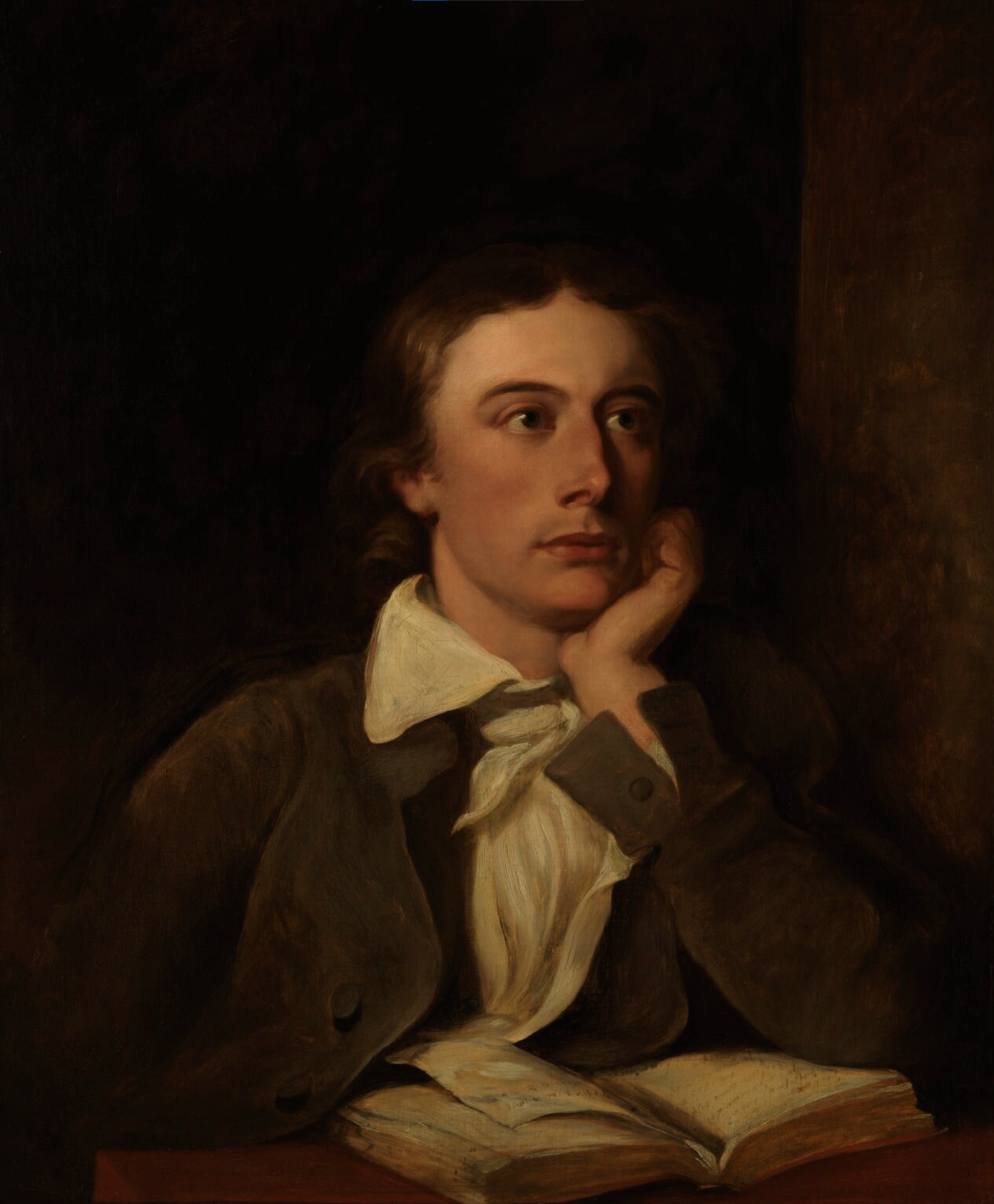
Keats - "Staffa"


Feeling a bit Romantic lately - posting has been very light recently, but soon to stop being such, it has been busy round these parts.

"Staffa" is a poem by John Keats about his visit to Fingal's Cave on Staffa, an island in Scotland.  Wordsworth wrote about it as well, though Keats did so with a touch of the Nights

Keats' poem, untitled, has been referred to as "Staffa" or by its first line "Not Aladdin Magian" and was first published after the poet's death:


NOT Aladdin magian
Ever such a work began;
Not the Wizard of the Dee
Ever such a dream could see;
Not St. John, in Patmos' Isle,
In the passion of his toil,
When he saw the churches seven,
Golden aisl'd, built up in heaven,
Gazed at such a rugged wonder.
As I stood its roofing under
Lo! I saw one sleeping there,
On the marble cold and bare.
While the surges washed his feet,
And his garments white did beat.
Drench'd about the sombre rocks;
On his neck his well-grown locks,
Lifted dry above the main,
Were upon the curl again.
"What is this? and what art thou?"
Whisper'd I, and touch'd his brow.
"What art thou? and what is this?"
Whisper'd I, and strove to kiss
The spirit's hand, to wake his eyes.
Up he started in a trice.
"I am Lycidas," said he,
"Fam'd in funeral minstrelsy.
This was architected thus
By the great Oceanus;
Here his mighty waters play
Hollow organs all the day;
Here by turns his dolphins all,
Finny palmers great and small,
Come to pay devotion due -
Each a mouth of pearls must strew.
Many a mortal of these days,
Dares to pass our sacred ways,
Dares to touch audaciously
This cathedral of the sea.
I have been the pontif-priest
Where the waters never rest,
Where a fledgy sea bird choir
Soars for ever; holy fire
I have hid from mortal man;
Proteus is my sacristan.
But the stupid eye of mortal
Hath pass'd beyond the rocky portal;
So for ever will I leave
Such a taint, and soon unweave
All the magic of the place.
'Tis now free to stupid face,
To cutters and to fashion boats,
To cravats and to petticoats.
The great sea shall war it down,
For its fame shall not be blown
At every farthing quadrille dance."
So saying, with a spirit's glance
He dived -

Friday, January 11, 2013

Byron's Copy of the Nights


George Gordon Byron (Lord Byron) (http://en.wikipedia.org/wiki/Byron), English lyricist, political activist, scandalizer and witty satirist also owned a copy of the Nights and here is some info on it:

"(23) Arabian Nights, by Scott, 6 vol.  LARGEST PAPER, with an additional set of plates inserted, green morocco, 1811" (208).

info from - Sale Catalogues of Libraries of Eminent Persons, Vol. 6, edited by A. N. L. Munby.  London:  Mansell Information/Publishing Ltd; Sotheby Parke-Bernet Publications, Ltd, 1971.

Friday, October 26, 2012

Wordsworth and the Nights

From The Prelude, by William Wordsworth ( published in 1850 but worked on during the poet's entire life, and a must read for everyone, wiki: http://en.wikipedia.org/wiki/The_Prelude)


I had a precious treasure at that time,
A little yellow canvass-covered book,
A slender abstract of the Arabian Tales;
And when I learned, as now I first did learn
From my companions in this new abode,
That this dear prize of mine was but a block
Hewn from a mighty quarry — in a word,
That there were four large volumes, laden all
With kindred matter — ’twas in truth to me
A promise scarcely earthly. Instantly
I made a league, a covenant with a friend
Of my own age, that we should lay aside
The monies we possessed, and hoard up more,
Till our joint Savings had amassed enough
To make this book our own. Through several months
Religiously did we preserve that vow,
And spite of all temptation hoarded up,
And hoarded up; but firmness failed at length,
Nor were we ever masters of our wish.

And afterwards, when, to my father’s house
Returning at the holidays, I found
That golden store of books which I had left
Open to my enjoyment once again,
What heart was mine! Full often through the course
Of those glad respites in the summertime
When armed with rod and line we went abroad
For a whole day together, I have lain
Down by thy side, O Derwent, murmuring stream,
On the hot stones and in the glaring sun,
And there have read, devouring as I read,
Defrauding the day’s glory — desperate –
Till with a sudden bound of smart reproach
Such as an idler deals with in his shame,
I to my sport betook myself again.

From The Prelude, Book V, li. 482-515

Wednesday, September 19, 2012

Moby Dick - Herman Melville


Chapter 97
 
The Lamp
 
      Had you descended from the Pequod's try-works to the Pequod's forecastle, where the off duty watch were sleeping, for one single moment you would have almost thought you were standing in some illuminated shrine of canonized kings and counsellors.  There they lay in their triangular oaken vaults, each mariner a chiselled muteness; a score of lamps flashing upon his hooded eyes.

In merchantmen, oil for the sailor is more scarce than the milk of queens.  To dress in the dark, and eat in the dark, and stumble in darkness to his pallet, this is his usual lot.  But the whaleman, as he seeks the food of light, so he lives in light.  He makes his berth an Aladdin's lamp, and lays him down in it; so that in the pitchiest night the ship's black hull still houses an illumination.

See with what entire freedom the whaleman takes his handful of lamps - often but old bottles and vials, though - to the copper cooler at the try-works, and replenishes them there, as mugs of ale at a vat.  He burns, too, the purest of oil, in its unmanufactured, and, therefore, unvitiated state; a fluid unknown to solar, lunar, or astral contrivances ashore.  It is sweet as early grass butter in April.  He goes and hunts for his oil, so as to be sure of its freshness and geniuneness, even as the traveller on the prairie hunts up his own supper of game.

Thursday, February 16, 2012

Imperial Burlesque Company - Arabian Nights

Here are a couple of posters from the Imperial Burlesque Company's Production The Arabian Nights or  Aladdins Wonderful Lamp, dating from the late 19th century.  Thanks JC.


Monday, January 9, 2012

William Holman Hunt - The Golden Prime of Haroun Alraschid (1866)

William Holman Hunt - The Golden Prime of Haroun Alraschid (1866) is a painting made as an accompanying visual piece to the poem "Recollections of the Arabian Nights" by Alfred, Lord Tennyson.

Read more about Hunt on wikipedia: http://en.wikipedia.org/wiki/William_Holman_Hunt

Saturday, September 17, 2011

"The French Translations of The Thousand and One Nights"

I'm excited by current trends in Nights scholarship that are focusing on specific versions, because there is several lifetimes of things to look into on the Nights, particularly by focusing on only one of its versions.

This speech below is from a Princeton website from 2003. Professor David Wrisly of the American University in Beirut is studying the particulars surrounding the 1806 French version of Jean-Jacques Antoine Caussin de Perceval (1759-1835).

The following is from the website http://www.princeton.edu/rbsc/fellowships/2002-03/wrisley.html.

"David Wrisley
American University of Beruit

"The French Translations of The Thousand and One Nights"

The English-speaking world knows the Arabian Nights by the famous translations of Burton and Lane. The first European translation of those medieval Arabic of stories entitled "Alf Leila wa Leila" was made, however, by the orientalist Antoine Galland. He published this work in French in twelve volumes between 1706 and 1720. Between that early eighteenth-century translation and the second major translation in French made by Joseph Mardrus a century later (1808-12), a flurry of other editions and reprints (some 75 according to Chauvin's Bibliographie des ouvrages arabes) of the Galland text appeared first in French and then in the other major languages across Europe.

J.H. Hanford's article for the Princeton Library Chronicle (XXVI, 1964-65) on the diverse collection of the Arabian Nights in English held at the Princeton University Library along with my scholarly interests in the practice of orientalist scholarship and the history of translation inspired me to take a look at the variety of French translations. Thanks to a Friends of the Princeton University Library short-term visiting fellowship, I was able to study in detail a number of these eighteenth-century French editions of the Galland translation in the summer of 2002.

In my research I noted not only on the textual modifications from edition to edition, but also investigated the French orientalists responsible for those editions. After examining the Galland edition ([Ex] 2263.2706.2), its form and its content, I chose to study the subsequent "reprints" of that base translation, in particular a fascinating one composed in nine volumes by Caussin de Perceval printed in 1806 ([Ex] 3229.616.123). From my research I intend to draft an article based on the latter, situating it in the context of French literary history of the period. I intend to focus on the plethora of paratextual material included in the eighteenth-century editions (notes, prefaces, commentaries) that give us an idea of the cultural meaning and worth of this translation to Europe. Linguistic features of the various translations from Arabic are complex and are detailed in the introduction to the now standard edition by Hussain Haddawy (1990-95).

Jean-Jacques Antoine Caussin de Perceval (1759-1835) was one of the well-placed orientalists in France in the generations following Antoine Galland's death in 1715. As a young man he was curator of the king's Oriental manuscripts. Later in life, he was appointed professor at the Collège de France. He made translations into French, in 1796 Apollonius of Rhodes' Expedition of the Argonauts from Greek, and in 1802 Howain's History of Sicily. In that same year, he published a two-volume Suite des mille et une nuits. Caussin was not alone in wanting to expand the original edition of Galland. Others such as Jacques Cazotte, a Frenchman who lived in Martinique, solicited the help of a Levantine (i.e. Arabic-speaking) monk to "translate" other tales not included in the manuscript held by Galland. No medieval edition of the text actually contained 1001 stories, but the popularity of the translations in Europe created a "demand for a complete edition" (Beaumont). Indeed, a textual history of the tradition of the 1001 Nights (to this day incomplete) would have to take into account numerous forgeries, inventions and varied sources from the Orient. It has been argued that the European expanded versions of the 1001 Nights even shaped, as if in a game of mirrors, the content of modern Arabic editions in India and Egypt by exporting new "authentic" texts.

The Princeton University Library's beautifully preserved 1806 edition in nine volumes of Caussin de Perceval gives one such example of a complex evolving textual history. Seven of the nine volumes contain a newly edited (and importantly, newly annotated) version of Galland's Mille et une nuits. The last two volumes complete the work, not only expanding the number of stories, but changing its overall scope and tone. It is to this composite work that I would like to turn.

Galland added footnotes occasionally to his tales of the Arabian Nights, thereby explaining some of the exoticism in his text. When Caussin de Perceval reprints Galland's text though, he takes this process of annotation to an entirely new level. At the beginning of the first volume, Caussin excerpts a portion of La Harpe's Lycée, the mammoth text of eighteenth-century literary historical scholarship. The passage chosen contains La Harpe's canonization and appropriation of the 1001 Nights as a great monument of "our literature." Caussin's editorial style continues in that spirit opening the medieval Arabic tales for the enjoyment and the edification of all readers and especially gens de lettres. In fact, this edition illustrates very well the professionalization of the Orientalist and the presentation of his erudition for public consumption.

At every turn, we are reminded by Caussin of the interest of such a text to the general reader, but unlike Galland's minimal annotation which seemed to privilege the literary integrity of the tales, Caussin's frequent interventions frame the 1001 Nights as a document of endless anthropological and historical interest. In the initial seven volumes (corresponding to Galland's original text) we read numerous footnotes commenting on questions of religious custom and the history of Islam, numismatics, Semitic etymologies, botanical and zoological facts, with even occasional comparisons to European cultural heritage. The last two volumes (8 and 9) illustrate most directly the spirit of Caussin's compilation. The stories themselves are taken from the same kind of "native informants" as those published by Cazotte and Chavis, yet Caussin is quick to distance himself from what he calls their "classicizing effect". He claims to translate the Arabic text more faithfully.

Caussin, it can be easily shown, also distances himself from Galland's style of translation where the clarity of the French-language text and its masterful composition can in and of itself please an audience. Caussin's 1806 text does not reflect the notion of language of a Boileau or a Racine, but suggests the something indeed has been lost in the translation. Annotation is essential. The philological commentary in volumes 8 and 9 is much more elaborate and Caussin even inserts back into the text transliterated Arabic and Persian fragments in italics which would seem designed to give back some the translation's lost authenticity. This re-orientalizing process goes along with a proliferation of commentary comparing the Arabic tales to great works in the Western tradition, Greco-Roman literature, medieval French and Italian stories and even the Song of Songs.

A further analysis of Caussin's edition will need to put these competing tendencies in his editorial practice into a larger context. His edition is after all both a testimony to his great predecessor Galland, and a renewal of the text, enriched by a (then) highly developed field of Oriental studies, created for a different audience with new expectations of Oriental literature and of the reading of foreign literature itself."

Saturday, March 19, 2011

Burton & the Wortley-Montague & Oxford


I chanced upon several letters in the Appendix of Volume 4 of Burton's Supplemental Nights which throw light on the situation he faced when he was in the process of translating his Nights.

He wanted to have the copy of the Wortley-Montague manuscript sent to him at the India Office from the Bodleian Library at Oxford but the board members at the library were refusing, despite Burton's insistence that he was not going to translate the racier passages or stories.

This may explain why ultimately there are several stories in the Wortley-Montague (including "Ali and his Large Member" of my previous post here: http://journalofthenights.blogspot.com/2011/03/ali-and-his-large-member.html) that Burton did not translate.

He also mentions the incident in the preface to the edition.  It's in my Volume 4 but may be in different volumes depending on which edition you are looking at, the initial set of his translations from the Wortley-Montague.

He tried to have a student who didn't know Arabic at Oxford copy the manuscript for him (like drawing the same characters without knowing what they said), but the student quit after a few days!

He eventually had someone photocopy (or the equivalent?) the manuscript for him and send it to him.  Ali and his large member is MIA however.  I'll have to check the 1995 German edition of the manuscript to see if Ali is there.   I have been officially sidetracked, though not completely off my own tracks.  Studying the Nights is truly like digging in the sand.

Many thanks to Jamie at USC for the question.

There is another English edition by Jonathan Scott translated before Burton which also includes stories from the Wortley-Montague but which, and I'm not certain here and only relying on Burton's notes so far, seem to be edited for cleanliness and not to contain an extensively translated amount of stories either.

Burton's letters are interesting to read in this volume.  He's quite upset with the library and ends the Appendix A of this volume with a scathing indictment of Oxford in general!

Some snippets from his letters:

"I may note that the translated tales (as may be seen by Scott's version) contain nothing indelicate or immoral; in fact the whole MS. is exceptionally pure.  Moreover, the MS., as far as I can learn, is never used at Oxford" (281).

"I am acquainted with many of the public libraries of Europe, but I know of none that would throw such obstacles in the way of students" (282).

The reason for the story not being translated by Burton, however, may not be related to the incident with the Bodleian after all.  As I look at Volume 5 I see his rebuttal to the library's refusal of lending the manuscript to him.  He writes to them that, because of their refusal, he's now going to put in all of the racy material, even overdoing it!

He also dedicates the Volume to them:

"TO THE CURATORS OF THE BODLEIAN LIBRARY, OXFORD:  Especially REVD. B. PRICE and PROFESSOR MAX MULLER."

He writes to them:

"Gentlemen,
I take the liberty of placing your names at the head of this Volume which owes its rarest and raciest passages to your kindly refusing the temporary transfer of the Wortley Montague MS. from your pleasant library to the care of Dr. Rost., Chief Librarian, India Office.  As a sop to "bigotry and virtue," as a concession to the "Scribes and Pharisees," I had undertaken, in case the loan were granted, not to translate tales and passages which might expose you, the Curators, to unfriendly comment.  But, possibly anticipating what injury would thereby accrue to the Volume and what sorrow to my subscribers, you were good enough not to sanction the transfer - indeed you refused it to me twice - and for this step my Clientele will be (or ought to be) truly thankful to you.

I am, Gentlemen,
Yours obediently,
RICHARD F. BURTON

BODLEIAN LIBRARY, August 5th, 1888."

"Ali and his large member" is not in this volume under this title.  Perhaps the story is inside another story or titled differently by Burton?  Perhaps the story doesn't really exist??

PS RICHARD F BURTON IS NOW ON TWITTER!:  http://twitter.com/#!/mirzaburton

Tuesday, March 15, 2011

Recollections of the Arabian Nights - Tennyson

Here is the poem "Recollections of the Arabian Nights" by English poet Alfred, Lord Tennyson. Originally published in 1830. More on Tennyson: http://en.wikipedia.org/wiki/Alfred,_Lord_Tennyson


Recollections of the Arabian Nights

When the breeze of a joyful dawn blew free
In the silken sail of infancy,
The tide of time flow'd back with me,
The forward-flowing tide of time;
And many a sheeny summer-morn,
Adown the Tigris I was borne,
By Bagdat's shrines of fretted gold,
High-walled gardens green and old;
True Mussulman was I and sworn,
For it was in the golden prime
Of good Haroun Alraschid.

Anight my shallop, rustling thro'
The low and bloomed foliage, drove
The fragrant, glistening deeps, and clove
The citron-shadows in the blue:
By garden porches on the brim,
The costly doors flung open wide,
Gold glittering thro' lamplight dim,
And broider'd sofas on each side:
In sooth it was a goodly time,
For it was in the golden prime
Of good Haroun Alraschid.

Often where clear-stemm'd platans guard
The outlet, did I turn away
The boat-head down a broad canal
From the main river sluiced, where all
The sloping of the moon-lit sward
Was damask-work, and deep inlay
Of braided blooms unmown, which crept
Adown to where the water slept.
A goodly place, a goodly time,
For it was in the golden prime
Of good Haroun Alraschid.

A motion from the river won
Ridged the smooth level, bearing on
My shallop thro' the star-strown calm,
Until another night in night
I enter'd, from the clearer light,
Imbower'd vaults of pillar'd palm,
Imprisoning sweets, which, as they clomb
Heavenward, were stay'd beneath the dome
Of hollow boughs. -- A goodly time,
For it was in the golden prime
Of good Haroun Alraschid.

Still onward; and the clear canal
Is rounded to as clear a lake.
From the green rivage many a fall
Of diamond rillets musical,
Thro' little crystal arches low
Down from the central fountain's flow
Fall'n silver-chiming, seemed to shake
The sparkling flints beneath the prow.
A goodly place, a goodly time,
For it was in the golden prime
Of good Haroun Alraschid.

Above thro' many a bowery turn
A walk with vary-colour'd shells
Wander'd engrain'd. On either side
All round about the fragrant marge
From fluted vase, and brazen urn
In order, eastern flowers large,
Some dropping low their crimson bells
Half-closed, and others studded wide
With disks and tiars, fed the time
With odour in the golden prime
Of good Haroun Alraschid.

Far off, and where the lemon grove
In closest coverture upsprung,
The living airs of middle night
Died round the bulbul as he sung;
Not he: but something which possess'd
The darkness of the world, delight,
Life, anguish, death, immortal love,
Ceasing not, mingled, unrepress'd,
Apart from place, withholding time,
But flattering the golden prime
Of good Haroun Alraschid.

Black the garden-bowers and grots
Slumber'd: the solemn palms were ranged
Above, unwoo'd of summer wind:
A sudden splendour from behind
Flush'd all the leaves with rich gold-green,
And, flowing rapidly between
Their interspaces, counterchanged
The level lake with diamond-plots
Of dark and bright. A lovely time,
For it was in the golden prime
Of good Haroun Alraschid.

Dark-blue the deep sphere overhead,
Distinct with vivid stars inlaid,
Grew darker from that under-flame:
So, leaping lightly from the boat,
With silver anchor left afloat,
In marvel whence that glory came
Upon me, as in sleep I sank
In cool soft turf upon the bank,
Entranced with that place and time,
So worthy of the golden prime
Of good Haroun Alraschid.

Thence thro' the garden I was drawn --
A realm of pleasance, many a mound,
And many a shadow-chequer'd lawn
Full of the city's stilly sound,
And deep myrrh-thickets blowing round
The stately cedar, tamarisks,
Thick rosaries of scented thorn,
Tall orient shrubs, and obelisks
Graven with emblems of the time,
In honour of the golden prime
Of good Haroun Alraschid.

With dazed vision unawares
From the long alley's latticed shade
Emerged, I came upon the great
Pavilion of the Caliphat.
Right to the carven cedarn doors,
Flung inward over spangled floors,
Broad-based flights of marble stairs
Ran up with golden balustrade,
After the fashion of the time,
And humour of the golden prime
Of good Haroun Alraschid.

The fourscore windows all alight
As with the quintessence of flame,
A million tapers flaring bright
From twisted silvers look'd to shame
The hollow-vaulted dark, and stream'd
Upon the mooned domes aloof
In inmost Bagdat, till there seem'd
Hundreds of crescents on the roof
Of night new-risen, that marvellous time
To celebrate the golden prime
Of good Haroun Alraschid.

Then stole I up, and trancedly
Gazed on the Persian girl alone,
Serene with argent-lidded eyes
Amorous, and lashes like to rays
Of darkness, and a brow of pearl
Tressed with redolent ebony,
In many a dark delicious curl,
Flowing beneath her rose-hued zone;
The sweetest lady of the time,
Well worthy of the golden prime
Of good Haroun Alraschid.

Six columns, three on either side,
Pure silver, underpropt a rich
Throne of the massive ore, from which
Down-droop'd, in many a floating fold,
Engarlanded and diaper'd
With inwrought flowers, a cloth of gold.
Thereon, his deep eye laughter-stirr'd
With merriment of kingly pride,
Sole star of all that place and time,
I saw him -- in his golden prime,
Of good Haroun Alraschid.